Arizona Public Service has asked the Arizona Corporation Commission for an average 16% increase in residential rates, about $20 a month for a typical household. As of October 29, 2026, the request is pending, not approved.
The next step is an administrative law judge’s recommendation, expected in late November. The Commission must vote by December 31, 2026, and any approved increase would likely take effect in early 2027. APS has also asked to switch to formula rates, which would let it adjust rates every year, and to raise a monthly charge paid by rooftop solar customers.
Key Takeaways
- APS filed a rate case on June 13, 2025 asking for a net increase of $579.52 million a year, or 13.99% across all customers, with residential customers paying 16.44% more.
- The Arizona Corporation Commission expects the judge’s recommendation by late November 2026 and must vote by December 31, 2026. New rates, if approved, would likely start in early 2027.
- APS’s proposed Formula Rate Mechanism would allow five annual rate adjustments before APS files its next full rate case.
- Arizona Attorney General Kris Mayes filed expert testimony in March 2026 arguing the increase could be cut from about 14% to about 3%.
- The Arizona Court of Appeals vacated APS’s grid access charge for rooftop solar customers in June 2026, while APS’s current request proposes raising that charge.
What APS Is Asking For
APS is asking for an average 16.44% increase for residential customers, which APS and news reports put at about $20 a month on a typical bill. Across all customer classes, the request would raise APS’s revenue by a net $579.52 million a year, or 13.99%, according to the public notice APS filed with the Commission. That 14% overall figure is the one you’ve probably seen in headlines.
How much your own bill would change depends on your rate plan and usage. On APS’s Time-of-Use 4pm to 7pm Weekdays plan, for example, APS proposed raising the basic service charge 9.17% and the energy charges about 16.6%. APS also requested a 10.70% return on equity, the profit rate the Commission allows on APS’s investments.
This is APS’s second rate case in a row. The Commission approved the last one on February 22, 2024, raising the typical residential bill about 8%, or $10 to $12 a month, effective March 1, 2024.

Why APS Says It Needs Higher Rates
APS says its current rates no longer cover what it costs to run and strengthen the grid. Rate cases look backward, so this request is built on what APS spent in a test year ending December 31, 2024. APS has pointed to rising equipment costs and the investments it made in 2024 and 2025 to keep service reliable as Arizona grows.
Growth is a big part of APS’s case. Its proposal would raise rates for extra-high-load customers, such as data centers, by about 47%, and change how the cost of new power plants and lines is assigned, so the customers driving that growth pay for it. APS says this protects homes and small businesses from paying for data center growth. Critics, including the Attorney General, argue residential customers would still carry too much of the cost.
What Formula Rates Would Mean for APS Customers
Formula rates would replace APS’s big rate cases every few years with smaller adjustments once a year. Under APS’s proposed Formula Rate Mechanism, a formula set by the Commission would adjust rates each year based on the prior 12 months of costs and revenue. APS would get five annual adjustments and then have to file a new full rate case.
APS says formula rates would make bills more predictable, that rates could go down as well as up, and that the Commission would still review every change. The proposal also limits each year’s residential adjustment to between 0.85 and 1.15 times the average adjustment.
Opponents see it differently. The Attorney General’s Office, the Residential Utility Consumer Office (RUCO), AARP and Arizona PIRG have all opposed formula rates in this case. Their main concerns are less public review and annual increases that compound. In its closing brief, the Attorney General’s Office argued that compounding annual increases would raise customer rates more than traditional rate cases would.
Who Is Challenging the Request
Arizona Attorney General Kris Mayes is the most prominent opponent. In March 2026, her office filed expert testimony arguing the increase could be cut from about 14% to about 3% while still letting APS maintain reliable service and its credit rating. In its August 27 closing brief, her office asked the Commission to set APS’s return on equity between 6.1% and 9.0% and to reject formula rates. APS disputes the 3% figure.
RUCO, the state agency that represents residential ratepayers at the Commission, opposes APS’s formula rate proposal and its requested return on equity. Consumer and advocacy groups have also weighed in. In October, Consumer Reports filed a petition signed by 1,035 APS customers asking the Commission to reconsider the request.
On October 9, 2026, Mayes asked the Commission to investigate whether APS’s Power Supply Adjustor shifted nearly $600 million in costs from data centers and other large energy users to other APS customers. That’s a request for an investigation, not a finding. APS and the Commission’s executive director have both publicly disputed the analysis behind it.
How the Arizona Corporation Commission Decides, and When
The Commission’s five elected commissioners make the final decision, after a judge reviews the evidence and recommends what they should do. The case moves through five steps, and the first three are done, according to the Commission’s July 2026 update.
1. Utility Filing (done)
APS filed its request on June 13, 2025, in Docket E-01345A-25-0105.
2. Public Comment (done)
The Commission held public comment meetings from January through May 2026. You can still send written comments to the docket through the Commission’s website.
3. Evidentiary Hearing (done)
The hearing ran from May 18 to July 7, 2026. It lasted 31 days, one of the longest in the Commission’s recent history, with nearly three dozen intervenors and more than 50 witnesses.
4. Judge’s Recommendation (expected late November 2026)
The administrative law judge will issue a Recommended Opinion and Order. It’s a recommendation, not a decision, and the commissioners can amend it.
5. Commission Vote (by December 31, 2026)
The commissioners will discuss, amend and vote on the recommendation at an open meeting. If they approve an increase, new rates are expected to take effect sometime in early 2027. The final rates can be higher, lower or different from what APS requested. No rate changes take effect until the case is complete.
The numbers to watch are the size of any approved increase, whether formula rates are approved, and what happens to the grid access charge. How much your bill changes will depend on your usage, your rate plan and the season.

What the Rate Case Means for APS Solar Customers
If you have rooftop solar with APS, two separate decisions affect your bill: a court ruling on the current grid access charge, and APS’s request to raise it. The grid access charge is a monthly fee of about $2 to $3 for APS solar customers on current rate plans. In this rate case, APS proposed roughly doubling it, to about $5 to $6 a month. APS has also proposed shifting more of the rate increase onto solar customers on older legacy rate plans.
On June 16, 2026, the Arizona Court of Appeals vacated the grid access charge the Commission approved in 2024, ruling that it was adopted without proper public notice. The court sent the issue back to the Commission, which must either hold a new hearing on the charge or drop it. APS and the Commission asked the court to reconsider, and the Attorney General and solar groups asked it to let the ruling stand. As of October 29, 2026, we couldn’t confirm a final resolution of those motions.
Look at your APS bill to see whether a Grid Access Charge line still appears. Solar customers on legacy plans won’t see a separate line, because the charge is built into their rates. Solar industry groups have asked the Commission to drop the charge in this rate case, so the November recommendation and December vote will settle part of this question.
Why More APS Customers Are Adding Batteries
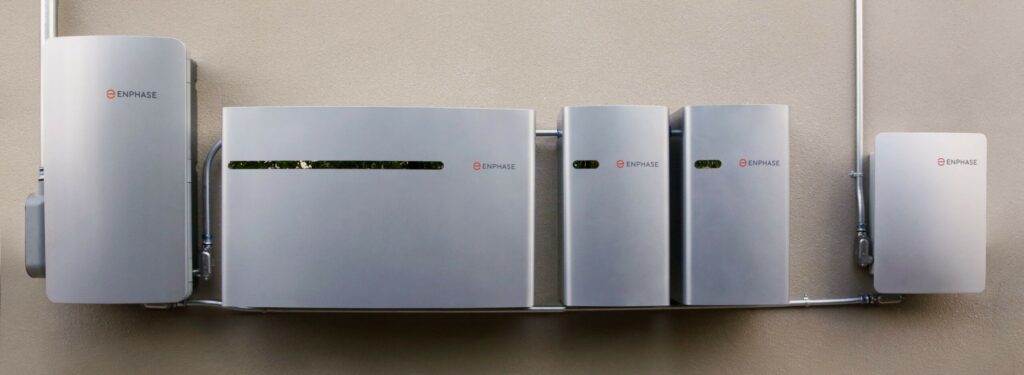
Most of the APS customers we talk with at Rooftop Solar say they’re concerned about the uncertainty around rising rates and falling export credits. That’s driving many of them to add a battery so they can use their own solar power instead of selling it back to APS, and it’s why 54% of the solar systems we’ve installed in 2026 include a battery.
The math behind that choice is simple. New APS solar customers who interconnect from September 1, 2026 through August 31, 2027 are credited $0.05554 per kWh for the power they send to the grid, locked for 10 years. On APS’s Time-of-Use 4pm to 7pm Weekdays plan, the summer on-peak rate is about 34.4 cents per kWh. A battery stores your midday solar for those evening hours instead of selling it for 5.5 cents and buying power back at 34. Our article on why Arizonans are still going solar and adding batteries walks through the numbers.
Whatever the Commission decides, a few steps help you plan. Check how much electricity your home uses and when you use the most, and confirm which APS rate plan you’re on. APS’s plan comparison page shows the options. For more on how costs have moved, see how solar costs compare with rising prices and how rising rates affect the value of solar. If backup power matters to you, our guide to preparing for power outages covers what a solar-plus-storage system can keep running.
Get a Quote Based on Your Actual APS Bills
We’ll look at your past APS bills, your rate plan and when you use the most power, then design a solar system, a battery or both around your home. We’ll model your savings on rates in effect today rather than on APS’s pending request, and update the numbers when the Commission decides.
Request a free quote or call us at (800) 786-7080.
Frequently Asked Questions
Is APS raising electricity rates in Arizona?
Not yet. APS has asked the Arizona Corporation Commission for an average 16.44% residential increase, and the request is still pending. The Commission must vote by December 31, 2026, and rates won’t change until the case is complete.
How much could APS electricity bills increase?
APS’s request would raise residential bills an average of 16.44%, about $20 a month for a typical household, and 13.99% across all customers. The Commission can approve more, less or something different, and your own change depends on your rate plan and usage.
When will the APS rate increase take effect?
If the Commission approves an increase, new rates are expected to take effect in early 2027. A judge’s recommendation is expected in late November 2026, and the Commission’s deadline to vote is December 31, 2026.
Why does APS say it needs a rate increase?
APS says its current rates don’t cover the rising cost of equipment and the grid investments it made in 2024 and 2025. It also wants growth costs, such as new power plants for data centers, assigned to the customers who drive them.
Who decides whether APS can increase rates?
The Arizona Corporation Commission’s five elected commissioners decide. An administrative law judge first reviews the evidence and issues a Recommended Opinion and Order, which the commissioners can amend before they vote.
Will APS solar customers pay more?
APS has proposed roughly doubling the grid access charge for solar customers on current plans, to about $5 to $6 a month, on top of the general rate increase. In June 2026, the Arizona Court of Appeals vacated the existing charge and sent it back to the Commission, so the outcome isn’t settled.
What can homeowners do about rising electricity costs?
Start by checking your usage, when you use the most power, and which APS rate plan you’re on. Solar, a battery or both can reduce how much power you buy from APS, and a design based on your actual bills shows whether it makes sense for your home.
Sources
- APS, 2025 Rate Case Public Notice (Docket E-01345A-25-0105): https://www.aps.com/-/media/APS/APSCOM-PDFs/Utility/Regulatory-and-Legal/Rate-Case/2025_Rate_Case_Public_Notice.pdf
- Arizona Corporation Commission, What’s Next in the APS Rate Case? (July 10, 2026): https://www.azcc.gov/news/home/2026/07/10/what-s-next-in-the-aps-rate-case
- Arizona Corporation Commission, ACC Votes on Arizona Public Service Company Rate Case (February 23, 2024): https://azcc.gov/news/home/2024/02/23/acc-votes-on-arizona-public-service-company-rate-case
- APS Newsroom, APS Rate Case Hearing Begins (May 18, 2026): https://www.aps.com/en/About/Our-Company/Newsroom/Articles/APS-Rate-Case-Hearing-Begins
- APS Newsroom, Understanding Formula Rates: What They Mean for APS Customers (June 15, 2026): https://www.aps.com/en/About/Our-Company/Newsroom/Articles/Understanding-Formula-Rates-What-They-Mean-for-APS-Customers
- KJZZ, APS wants to raise rates, but it’s also asking for a major overhaul in how it charges customers (March 5, 2026): https://www.kjzz.org/politics/2026-03-05/aps-wants-to-raise-rates-but-its-also-asking-for-a-major-overhaul-in-how-it-charges-customers
- ABC15, Customers push back against APS proposed rate hike (January 2026): https://www.abc15.com/news/local-news/customers-push-back-against-aps-proposed-rate-hike
- Arizona Attorney General, expert testimony on the APS rate request (March 3, 2026): https://www.azag.gov/press-release/attorney-general-mayes-files-expert-testimony-showing-aps-rate-hike-could-be-cut-14-3
- Arizona Attorney General, Closing Brief in the APS rate case (August 27, 2026): https://stateimpactcenter.org/files/AG_Actions_Arizona_APS_Rate_Case_Closing_Brief_08.27.2026.pdf
- Arizona Attorney General, request to investigate the Power Supply Adjustor (October 9, 2026): https://www.azag.gov/press-release/attorney-general-mayes-urges-arizona-corporation-commission-investigate-whether-aps
- Arizona Capitol Times, APS rate case kicks off with hours of protest over 14% rate increase (May 19, 2026): https://azcapitoltimes.com/news/2026/05/19/aps-rate-case-kicks-off-with-hours-of-protest-over-14-rate-increase/
- Consumer Reports, letter and petition to the Arizona Corporation Commission (October 6, 2026): https://advocacy.consumerreports.org/wp-content/uploads/2026/10/AZ-APS-2026-Rate-Case-Letter-.pdf
- Arizona Attorney General, Court of Appeals vacates the APS solar surcharge (June 2026): https://www.azag.gov/press-release/court-appeals-sides-attorney-general-mayes-vacates-corporation-commissions-solar
- KJZZ, Arizona appeals court overturns extra fee on APS solar customers (June 16, 2026): https://www.kjzz.org/politics/2026-06-16/arizona-appeals-court-overturns-extra-fee-on-aps-solar-customers
- ABC15, Arizona court rules against Arizona Public Service’s solar fee (June 2026): https://www.abc15.com/news/state/arizona-court-rules-against-arizona-public-services-solar-fee
- AriSEIA, filings on the APS grid access charge (August 2026): https://www.ariseia.org/news/archives/08-2026
- Pinnacle West Capital Corp., Form 10-Q for the quarter ended June 30, 2026 (APS export rate): https://www.sec.gov/Archives/edgar/data/0000764622/000076462226000041/pnw-20260630.htm
- APS, Time-of-Use 4pm to 7pm Weekdays plan: https://www.aps.com/en/Residential/Service-Plans/Compare-Service-Plans/Time-of-Use-4pm-7pm-Weekdays
- Rooftop Solar internal project data, 2026 battery attachment rate (54%) and customer conversations
Rate case status, rates and charges are accurate as of October 29, 2026 and may change. Savings vary by home, usage, equipment and rate plan.