Key Takeaways
- APS has announced another Public Safety Power Shutoff (PSPS) event for Northern Arizona, just months after its first wildfire-related shutoff.
- Planned power outages are becoming an increasingly common wildfire prevention tool.
- Solar and battery storage systems can help homeowners maintain power during utility shutoffs.
- Energy resiliency is becoming an essential part of home preparedness in Arizona.
- Climate change and growing wildfire risk are creating new challenges for electric grid reliability.
- Homeowners who prepare now can reduce disruption during future outage events.
Editor’s Update (June 2026)
This article has been updated to reflect APS’s June 2026 Public Safety Power Shutoff announcement, which indicates that wildfire-related grid shutoffs are becoming a recurring operational strategy in Northern Arizona.
When this article was originally published in April 2026, APS had just conducted its first wildfire-related Public Safety Power Shutoff (PSPS) in Northern Arizona.
Now, APS has announced another potential PSPS event for June 27, 2026, affecting portions of eastern Flagstaff, Doney Park, Timberline, Mormon Lake, Cosnino, Sunset Crater, Walnut Canyon, Valle, Tusayan, and areas surrounding Grand Canyon National Park.
The second announcement reinforces what many energy experts anticipated: wildfire-related power shutoffs are becoming a recurring operational strategy for utilities seeking to reduce fire risk during extreme weather conditions.
For homeowners, that means energy resiliency is no longer just about preparing for storms or equipment failures. It now includes preparing for planned outages intended to protect communities from catastrophic wildfires.
Understanding APS Power Shutoffs
Arizona Public Service (APS) has begun implementing precautionary power shutoffs in parts of Northern Arizona when wildfire risk reaches dangerous levels. These events, known as Public Safety Power Shutoffs (PSPS), are designed to reduce the chance of electrical infrastructure igniting wildfires during periods of high winds, low humidity, and dry vegetation conditions.
When this article was first published, many homeowners viewed PSPS events as unusual circumstances. However, with another shutoff announced just weeks later, it is becoming clear that these events may become a recurring part of life in wildfire-prone areas.
What a PSPS Means for Homeowners
Unlike traditional outages caused by storms or equipment failures, a PSPS is intentional. Power is shut off as a precaution before dangerous conditions develop.
As a result:
- Outages may occur even when utility equipment is functioning normally.
- Service restoration can take hours or days depending on weather and safety inspections.
- Essential household systems may be unavailable without backup power.
- Homeowners may have limited time to prepare once a shutoff is announced.
What the June 2026 Shutoff Tells Us
The significance of APS’s June 2026 announcement is not simply that another outage may occur.
The significance is that a pattern is beginning to emerge.
Consider the timeline:
- April 2026: APS conducted its first PSPS event affecting thousands of customers.
- June 2026: APS announced another PSPS event impacting a larger area of Northern Arizona.
- Both events were driven by wildfire risk rather than equipment failures.
- Both events were preventative measures intended to reduce wildfire ignition risk.
For homeowners, the takeaway is straightforward: future outages may increasingly be caused by safety decisions rather than infrastructure problems.
This represents a fundamental shift in how many people think about grid reliability.

The Importance of Energy Resiliency
Energy resiliency is the ability to maintain power when the utility grid cannot provide it.
As wildfire risk increases and PSPS events become more common, Arizona homeowners are beginning to evaluate how prepared their homes are for extended outages.
A resilient home may include:
- Backup power for refrigeration and food preservation.
- Reliable communications and internet access.
- Continued operation of medical devices and critical equipment.
- Lighting, security systems, and other essential household functions.
Preparing for outages before they occur provides greater flexibility and peace of mind when conditions become uncertain.
Solar + Storage: Your Backup Power Solution
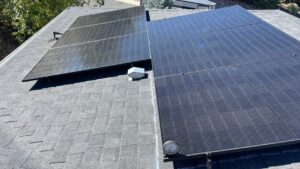
Solar energy offers homeowners the opportunity to generate electricity directly from the sun rather than relying exclusively on the utility grid.
When paired with battery storage, your system becomes a powerful resiliency tool.
A solar-plus-storage system can:
- Produce energy during daylight hours.
- Store excess electricity for later use.
- Automatically provide backup power during outages.
- Reduce dependence on utility infrastructure.
This combination allows homeowners to maintain critical household operations even when grid power is unavailable.
In addition to resiliency benefits, solar also reduces long-term energy costs and provide protection from future utility rate increases.
Preparing for Future Power Shutoffs
Whether caused by wildfire risk, severe weather, or infrastructure challenges, power outages are becoming a larger part of the energy conversation.
If APS Announces a PSPS Event in Your Area
Short-term preparation:
- Charge phones, laptops, and battery packs.
- Confirm medical devices have backup power.
- Prepare refrigeration and food storage plans.
- Fuel vehicles and emergency equipment.
- Review outage communications from APS.
- Test generators or backup battery systems.
Long-term preparation:
- Evaluate battery backup options.
- Consider a solar-plus-storage system.
- Identify critical circuits that should remain powered.
- Develop a family emergency preparedness plan.
Taking proactive steps today can significantly reduce stress and disruption during future outage events.
Conclusion: Secure Your Energy Future
The question for Arizona homeowners is no longer whether wildfire-related power shutoffs can happen.
They already have.
And with APS announcing another PSPS event in June 2026, it is becoming increasingly clear that planned outages may become a recurring feature of life in Northern Arizona during periods of extreme fire risk.
The homeowners who prepare today will have more options tomorrow.
Whether that means installing battery storage, investing in solar energy, or simply developing a stronger emergency preparedness plan, improving your home’s energy resiliency can provide confidence when the next outage warning arrives.
Because energy security is about more than lowering electric bills.
It is about keeping your home powered when the grid cannot—or chooses not to.
Frequently Asked Questions
What is a Public Safety Power Shutoff (PSPS)?
A Public Safety Power Shutoff (PSPS) is a preventative power outage initiated by a utility company to reduce the risk of wildfires during dangerous weather conditions such as high winds, low humidity, and dry vegetation.
Why is APS conducting power shutoffs in Northern Arizona?
APS uses PSPS events to reduce the likelihood that electrical equipment could spark a wildfire during periods of elevated fire danger. These shutoffs are intended to protect communities, infrastructure, and natural resources.
Can solar panels provide power during a utility outage?
Most grid-connected solar systems automatically shut down during an outage for safety reasons. However, solar systems paired with battery storage can continue providing power to designated circuits during a grid outage.
How does battery storage improve energy resiliency?
Battery storage systems store electricity generated by solar panels or the grid and make it available during outages. This allows homeowners to keep critical appliances and systems operating when utility power is unavailable.
How can homeowners prepare for future APS shutoffs?
Homeowners can improve preparedness by developing emergency plans, identifying critical electrical loads, installing backup power systems, and exploring solar-plus-storage solutions that provide greater energy independence.