The energy landscape in Arizona is shifting, and homeowners are feeling it.
Electricity powers air conditioning during triple-digit summers, keeps homes running, and supports daily life. But the grid that delivers it is under growing pressure.
Across our state, three converging forces are making energy more expensive, less predictable, and less reliable:
- Rising electricity rates
- A rapidly changing energy future
- Increasing power outages during extreme heat
Solar plus battery storage is not just about sustainability. It is about protection.
Here is how homeowners can secure their energy future and how Rooftop Solar helps you navigate the decision with clarity and confidence.
Rising Electricity Rates and What It Means for Solar Adoption
If it feels like your electric bill has been climbing year after year, you are not imagining it.
Over the past three years, Arizona Public Service customers have experienced sustained upward pressure on rates through Arizona Corporation Commission proceedings:
2023 to 2024: APS received approval for a major rate case resulting in roughly an 8 percent residential increase.
2025: Those increases continued flowing through customer bills as grid modernization, wildfire mitigation, and infrastructure investments were implemented.
2026 (proposed): APS has filed for an additional approximately 14 percent rate increase, which could add roughly $20 per month to a typical residential bill if approved. (See APS’s filing summary here.)
At the same time, electricity demand in Arizona is reaching historic levels.
Utilities have now hit new peak demand records for three straight years, including an APS system peak of 8,527 megawatts in 2025. Arizona Corporation Commission filings show regulators have already approved projects adding approximately 4,750 megawatts of new generation capacity to keep pace.
Artificial intelligence and data centers are a major driver of this growth. Research indicates that data centers alone could consume up to 16.5 percent of Arizona’s electricity by 2030. Utilities across the country are tying rate increase requests to unprecedented demand growth, extreme heat, and infrastructure expansion.
Long-term projections suggest baseline electricity demand could grow by roughly 60 percent over the next 30 years from population and economic expansion alone.
When demand is setting records and utilities are fast-tracking new generation, the conversation shifts. The question becomes less about whether costs will rise and more about how exposed homeowners want to be to that volatility.
We break down what this means for households in detail in our recent analysis of projected power bill increases.
Arizona Power Bills Could Rise 14% by 2026 – Why Going Solar Now Makes Sense
How Solar and Battery Storage Reduce Long-Term Exposure
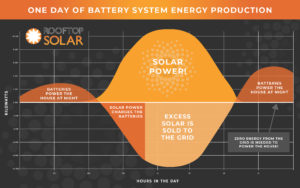
- Rooftop solar reduces the total kilowatt-hours you purchase from the grid.
- Battery storage allows you to use stored solar energy during peak time-of-use hours.
- You reduce exposure to future rate cases and infrastructure cost pass-throughs.
You remain grid-connected, but you are less vulnerable to long-term escalation driven by growth and modernization.
A Changing Energy Future: Heat, Growth, and Grid Strain
Arizona sits at the intersection of climate pressure and rapid economic growth.
Average temperatures across the Southwest have trended upward over recent decades, and extreme heat events are becoming more frequent and intense. Longer summers drive higher air conditioning demand and push peak loads to new records.
At the same time, population growth, electrification, electric vehicles, and commercial development are increasing overall electricity demand. Grid operators across the West have repeatedly warned that extreme heat combined with rising demand tightens reserve margins.
When margins shrink, utilities must build new generation, import power at premium prices, or accelerate infrastructure projects. Those costs ultimately flow back to ratepayers.
For homeowners, this creates uncertainty:
- Will rates stabilize or continue rising?
- Can infrastructure keep pace with record demand?
- How will extreme heat affect reliability during peak months?
How Solar + Battery Storage Strengthens Energy Independence
- Your roof becomes a local generation asset.
- Your battery becomes a controllable energy reserve.
- Your home becomes more resilient to grid stress and market volatility.
You are not predicting regulatory outcomes. You are building stability into your home.
See how this works in practice in one of our recent solar + storage installations.
Solar + Storage Project Case Study
Power Outages and the Role of Solar Battery Backup
Across the United States, outage frequency and duration have increased due to extreme weather, aging infrastructure, and grid strain.
In Arizona, outages during summer heat waves are more than inconvenient. They can mean:
- Loss of cooling during triple-digit temperatures
- Food spoilage
- Remote work disruption
- Increased health risk for vulnerable family members
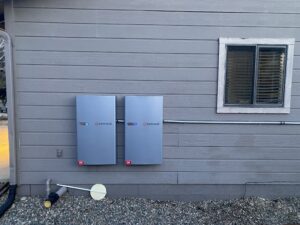
A properly designed solar battery backup system automatically disconnects from the grid during an outage and powers essential circuits in your home. When paired with rooftop solar, the battery can recharge during daylight hours, extending backup capability without fuel storage or manual intervention.
Protection is automatic and quiet.
A Practical Energy Security Strategy
Solar plus battery storage is not about going off-grid. It is about managing risk.
Protection from rising rates.
Protection from record-setting demand.
Protection from grid uncertainty.
Protection from outages during extreme heat.
Securing your energy future means reducing exposure, not eliminating connection.
How Rooftop Solar Helps You Make a Smart Decision
Since 2008, Rooftop Solar has helped Northern Arizona homeowners design systems built for real-world conditions including high heat, mountain snow loads, time-of-use pricing, and evolving utility structures.
Our approach is analytical and transparent:
- Detailed load and rate analysis
- Site-specific production modeling
- Battery storage sizing based on resilience goals
- Clear financing and incentive guidance
- Long-term monitoring and service support
If you would like to evaluate how exposed your household is to rising electricity costs and grid uncertainty, connect with us to schedule a no-pressure energy strategy review with our team.
The grid will continue to evolve.
Your home does not have to absorb all the uncertainty.
Frequently Asked Questions
1. Will electricity rates continue rising in Arizona?
While no one can predict exact future rate decisions, recent Arizona Corporation Commission proceedings and utility filings show sustained upward pressure driven by infrastructure upgrades, extreme heat demand, and rapid growth in electricity consumption. When utilities must build new generation or expand transmission capacity, those costs are typically recovered through ratepayers. Solar and battery storage reduce your exposure to that long-term escalation.
2. Can solar panels power my home during a power outage?
Standard grid-tied solar systems shut off during an outage for safety reasons. However, when paired with properly designed battery storage, your system can automatically disconnect from the grid and power essential circuits in your home. When solar production resumes during daylight hours, the battery can recharge, extending backup capability.
3. Is battery storage necessary, or can I install solar alone?
Solar alone can significantly reduce your electricity bills. Battery storage adds two additional benefits: protection against outages and the ability to shift your own energy into expensive peak time-of-use periods. Whether storage makes sense depends on your resilience goals, rate plan, and long-term energy strategy.
4. How does rising demand from data centers and AI affect homeowners?
Large data centers require substantial amounts of electricity, and Arizona has seen rapid growth in this sector. As statewide demand increases, utilities must expand infrastructure and generation capacity. Those investments can contribute to future rate cases. Installing solar reduces your dependence on grid-supplied electricity, helping insulate your household from broader demand-driven volatility.
5. Does going solar mean disconnecting from the grid?
No. Most homeowners remain grid-connected. Solar and battery systems are designed to reduce dependence on the grid, not eliminate it entirely. You continue to draw electricity when needed, but you rely less on utility power during peak hours and high-demand periods. Energy independence is about reducing exposure, not isolating your home.